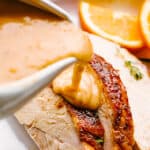
Turkey Gravy Recipe
Transform those deliciously browned turkey drippings into a delicious Turkey Gravy in just minutes!
Servings: 8 servings
Ingredients
- 2½ cups pan drippings from roast turkey breast
- 4 tablespoons butter
- ¼ cup all-purpose flour
- 1 teaspoon chopped fresh thyme or ½ teaspoon dried thyme
- 1 teaspoon chopped fresh rosemary leaves or ¼ to ½ teaspoon dried rosemary
- salt and freshly ground black pepper to taste
Instructions
- Collect the drippings. Take the turkey drippings and loosened browned bits from the roasting pan where you cooked the turkey, and strain them through a mesh sieve.
- Discard the solids and reserve 2-1/2 cups of the pan drippings. If you do not have enough pan drippings, add chicken broth to the drippings to make 2-1/2 cups liquid. Set aside.
- Cook the flour. Melt the butter in a saucepan over medium heat. Whisk in the flour and cook for 1 minute or until browned and starts to smell nutty. Pour in 1/2 cup of the pan drippings and whisk until well incorporated.
- Cook the gravy. Slowly whisk in the remaining pan drippings; continue to whisk and bring to a boil. Reduce heat to a simmer; whisk in chopped herbs and continue whisking until thickened and bubbly, about 4 to 5 minutes.
- Finish and serve. Remove the gravy from the heat and taste it for salt and pepper; adjust as needed. Serve warm.
Notes
- Whisk continuously to prevent lumps. This also incorporates the roux and makes a smoother texture.
- Season to taste: Taste the gravy; if it's too salty, add a splash of water. If it's too bland, add a pinch of salt and pepper.
- Keep It Warm: Gravy cools and thickens quickly, so keep it warm until it's time to serve.
- For a different flavor, add a splash of wine, sherry, brandy, soy sauce, lemon juice, or cream.
- Gravy can also be prepared with turkey broth, roast chicken drippings, chicken broth, or vegetable broth.
Nutrition
Calories: 65.88kcal | Carbohydrates: 3.11g | Protein: 0.59g | Fat: 5.78g | Saturated Fat: 3.61g | Cholesterol: 15.05mg | Sodium: 157.57mg | Potassium: 23.5mg | Fiber: 0.1g | Sugar: 0.01g | Vitamin A: 174.93IU | Vitamin C: 2.06mg | Calcium: 3.44mg | Iron: 0.24mg
